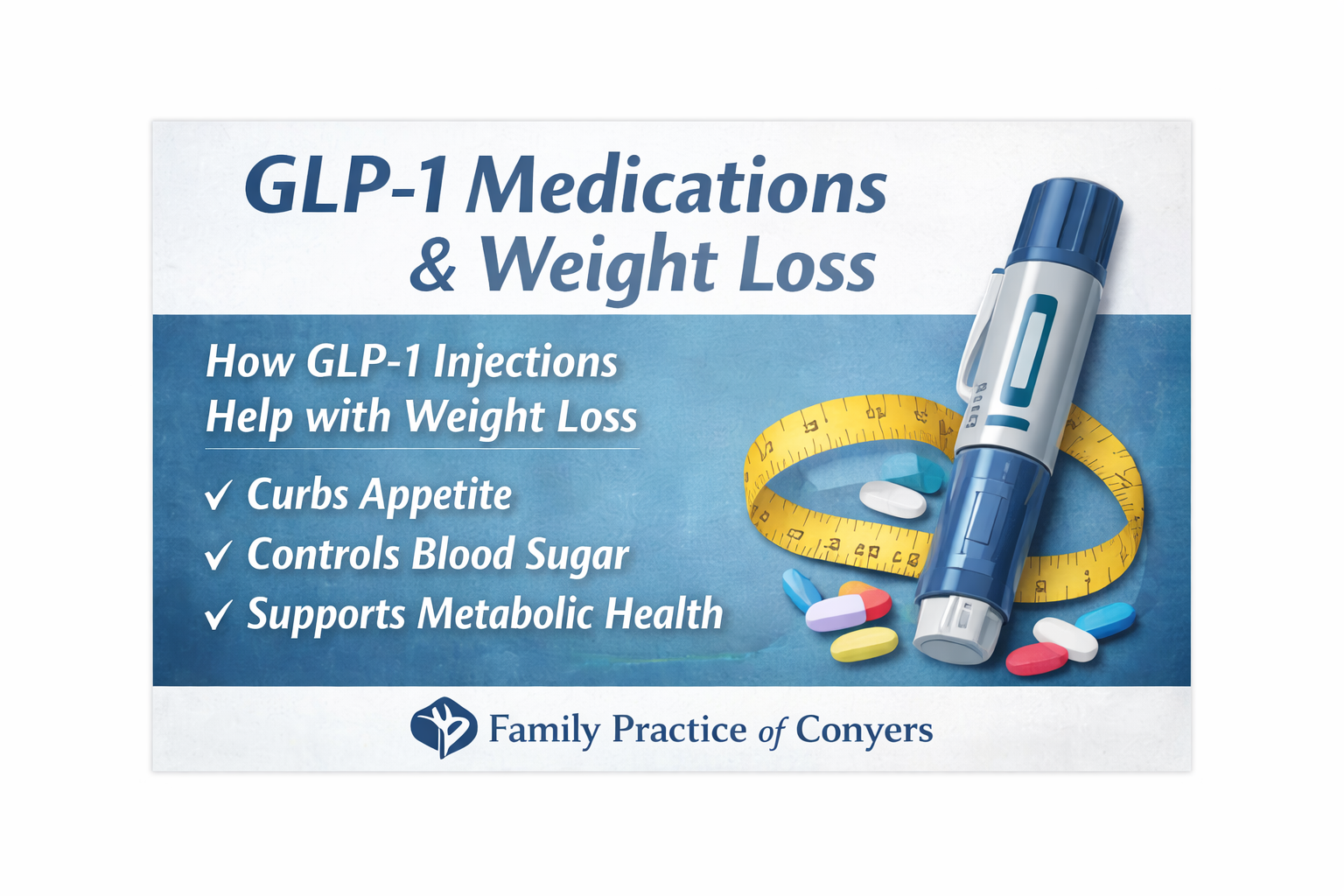
GLP-1 Medications: What Patients Need to Know About Weight Loss Injections
GLP-1 medications, weight loss injections, GLP-1 weight loss, semaglutide, medical weight loss
When the Seasons Affect Your Mood
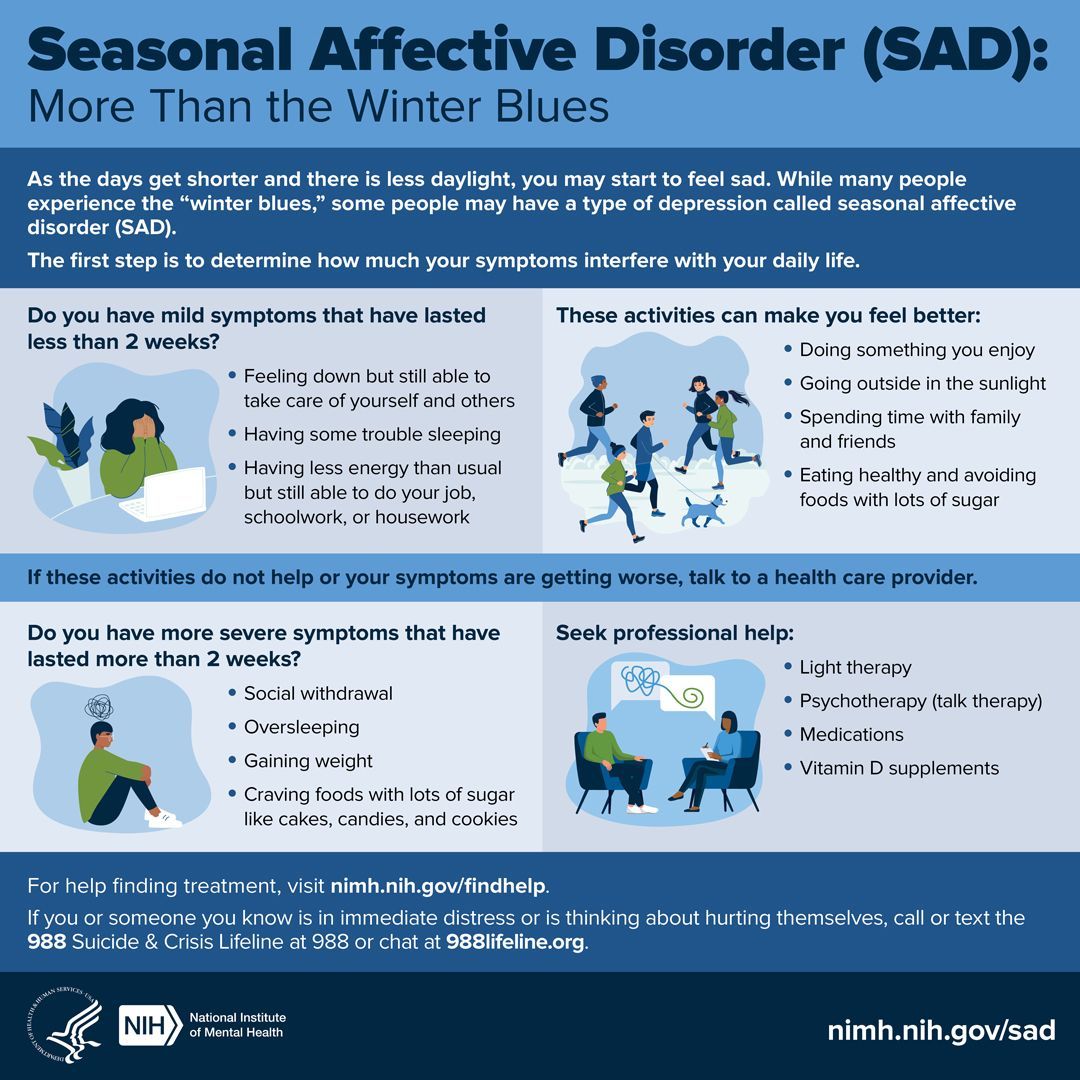
As the days grow shorter and temperatures drop, many people notice changes in their mood, energy, and motivation. For some, these changes go beyond the typical “winter blues” and develop into Seasonal Affective Disorder (SAD)—a type of depression linked to changes in the seasons.
At Family Practice of Conyers, we believe mental health is just as important as physical health. Understanding SAD is the first step toward feeling better and reclaiming your sense of balance during the colder months.
What Is Seasonal Affective Disorder?
Seasonal Affective Disorder is a form of depression that typically occurs during fall and winter when daylight hours are shorter. Less commonly, some individuals experience SAD in the spring or summer. While anyone can experience SAD, it’s more common in adults and in people who live in areas with less sunlight during winter.
SAD is not a weakness or something you can simply “snap out of.” It’s a medical condition influenced by changes in light exposure, brain chemistry, and circadian rhythms.
Common Symptoms of SAD
Symptoms can vary from person to person, but often include:
- Persistent sadness or low mood
- Fatigue or low energy
- Loss of interest in activities you once enjoyed
- Difficulty concentrating
- Changes in sleep patterns (sleeping more than usual)
- Increased appetite or cravings for carbohydrates
- Feelings of hopelessness or irritability
If these symptoms last for weeks and interfere with daily life, it may be more than seasonal stress.
Why Does SAD Happen?
Reduced sunlight during fall and winter can affect the body in several ways:
- Lower serotonin levels, which play a role in mood regulation
- Disrupted circadian rhythms, impacting sleep and energy
- Increased melatonin production, which can cause drowsiness and low energy
These biological changes can significantly influence how you feel day to day.
How SAD Is Treated
The good news is that SAD is treatable. Treatment plans are personalized and may include:
- Light therapy to simulate natural sunlight
- Talk therapy to address emotional patterns and stressors
- Lifestyle adjustments, such as regular exercise, healthy nutrition, and consistent sleep routines
- Medication, when appropriate, to help manage symptoms
Your primary care provider can help determine the right approach based on your symptoms and overall health.
When to Seek Help
If seasonal mood changes are affecting your work, relationships, or quality of life, it’s important to talk to a healthcare provider. Early support can prevent symptoms from becoming more severe and help you feel better sooner.
At Family Practice of Conyers, we take a whole-person approach to care—addressing both mental and physical well-being in a supportive, judgment-free environment.
You’re Not Alone
Seasonal Affective Disorder is more common than many people realize, and help is available. With the right care and support, you can feel more like yourself again—no matter the season.
If you or a loved one are experiencing symptoms of SAD, we’re here to help. Schedule an appointment with Family Practice of Conyers to start the conversation and take the first step toward brighter days ahead.